Advocacy
Current Issues Impacting Public Power

Filters

Search
Filtering By:
This is some text inside of a div block.

LPPC Joins Energy Industry in Raising Concerns Over NextNav Spectrum Proposal
October 6, 2026
LPPC joined leading national energy trade associations in urging the Department of Energy to protect the reliability, affordability, and resilience of critical energy infrastructure as the FCC considers NextNav’s proposal to reconfigure the 902–928 MHz spectrum band.
Read More
LPPC Joins the National Hydropower Association in Supporting the Hydropower Licensing Affordability Act
August 6, 2026
LPPC is proud to join the National Hydropower Association in supporting the Hydropower Licensing Affordability Act (H.R. 9337 / S. 5048), legislation that would improve the federal hydropower licensing process while maintaining strong environmental protections.
Read More
Strengthening Drone Security for the Electric Grid: Utility Associations Weigh In on FAA Proposal
August 5, 2026
The nation’s leading electric utility trade associations — including LPPC, APPA, EEI, and NRECA — have filed joint comments urging the Federal Aviation Administration (FAA) to strengthen its proposed rules on UAS to protect the security and resiliency of the nation's electric grid
Read More

LPPC Testimony & Policy Feedback Included as House Energy & Commerce Committee Advances 6 Energy Bills to the Full House of Representatives
July 21, 2026
In April, LPPC President Tom Falcone testified before the House Energy & Commerce Subcommittee on Energy to advocate for customer protections through cost causation, support grid innovation without increasing costs, and promote credible load forecasts. Recently, six of these bills passed the committee and now make their way to the full House of Representatives for consideration.
Read More

LPPC Supports Grid Reliability and Disaster Response in Federal Grant Reforms
July 7, 2026
In comments filed on OMB's proposed revisions to the Uniform Guidance governing federal financial assistance, LPPC supports responsible stewardship of taxpayer dollars and recommends targeted clarifications that help the rule work as intended for the 30+ million Americans served by its member utilities.
Read More
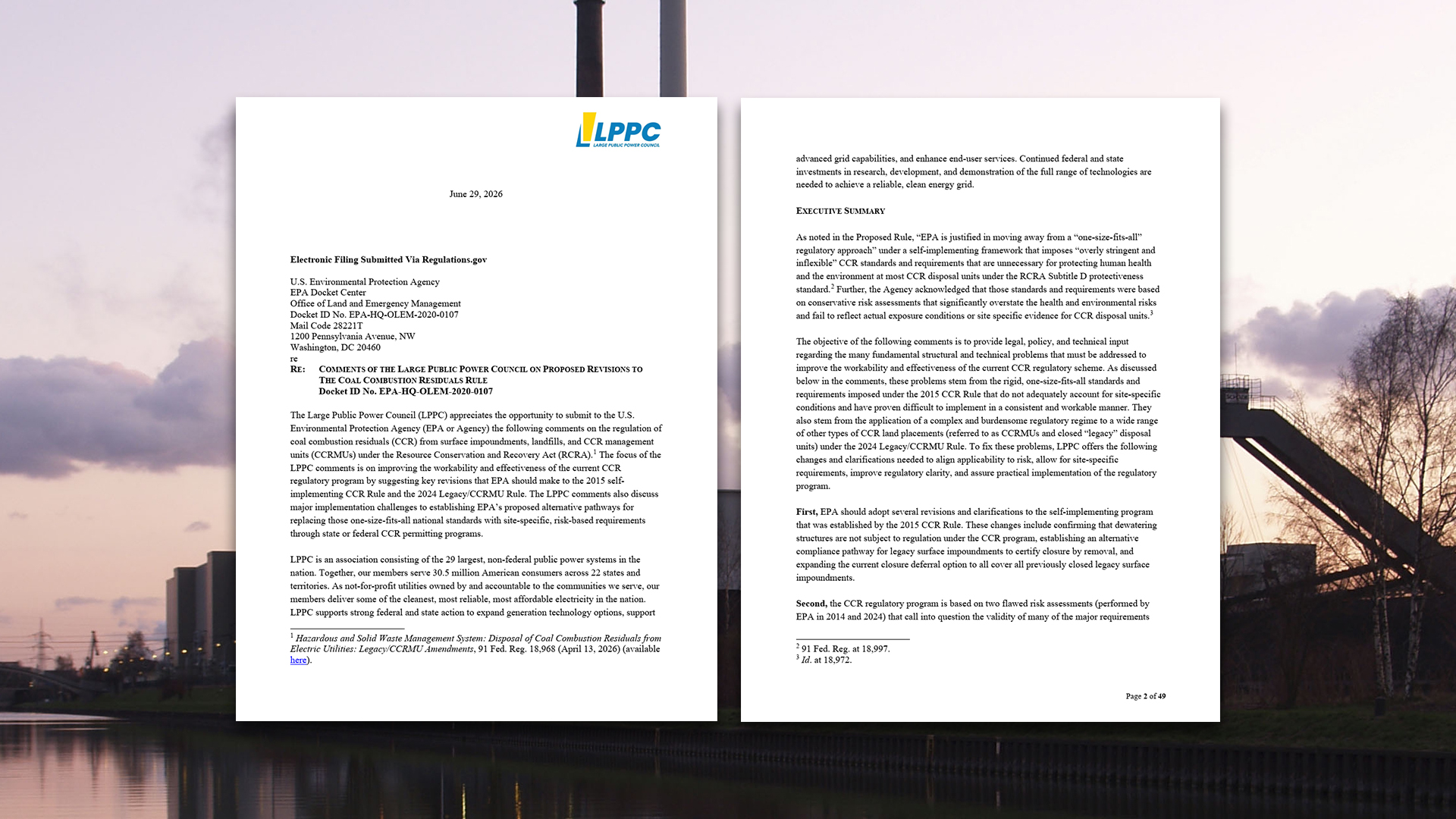
LPPC Urges EPA to Modernize Coal Combustion Residuals with Risk-Based Reforms
June 29, 2026
LPPC's Environmental Regulations Task Force submitted comments to the U.S. Environmental Protection Agency (EPA) supporting practical, risk-based reforms to the federal Coal Combustion Residuals (CCR) Rule.
Read More
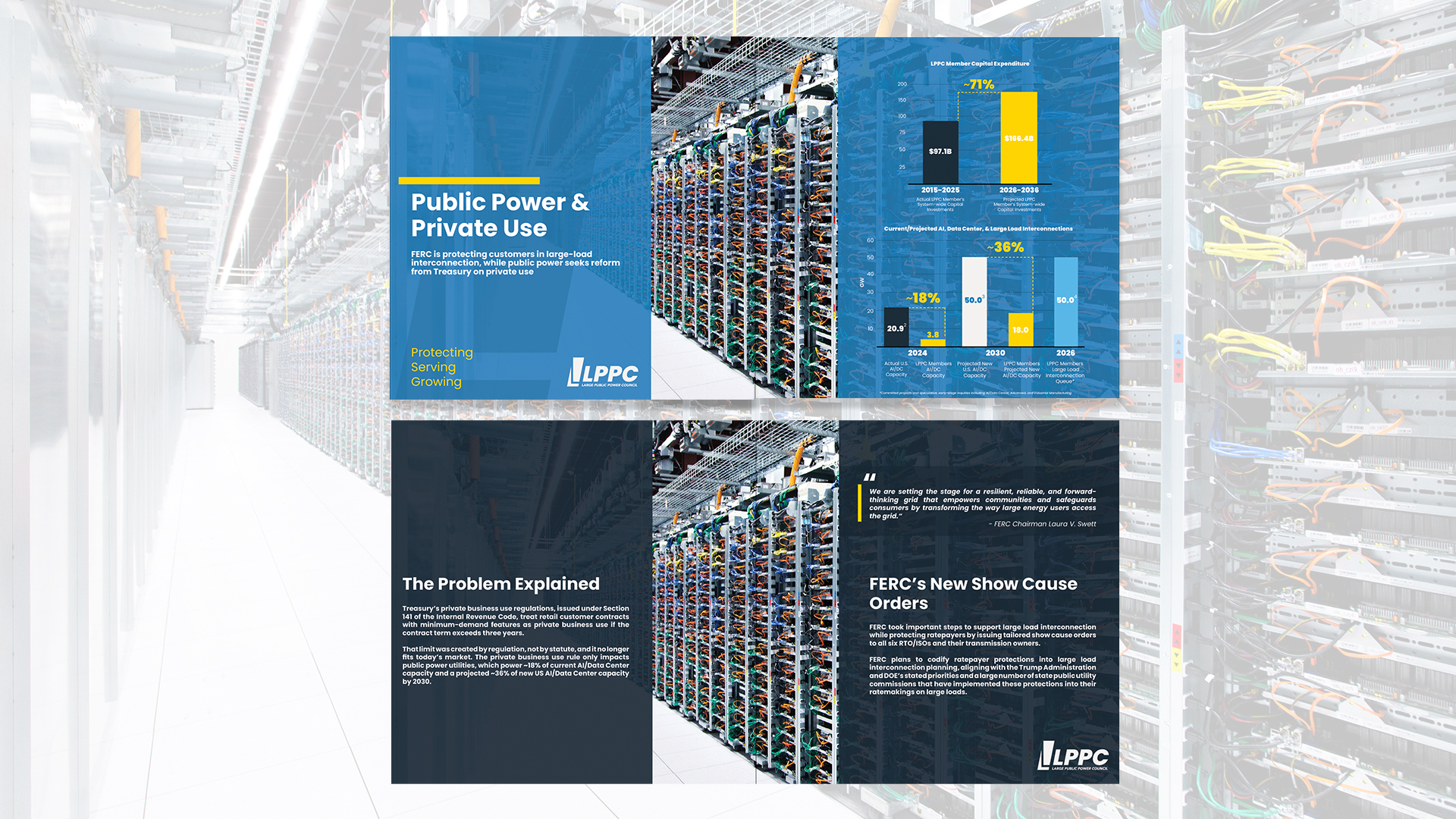
FERC is Protecting Customers in Large-Load Interconnection, while Public Power Seeks Reform from Treasury on Private Use
June 29, 2026
The contract protections FERC is embracing are ones public power cannot fully use. Under Treasury's private business use rules, public power utilities cannot sign large-load contracts beyond three years, a limit set by regulation, not statute.
Read More
LPPC Joins the Coalition for Derivatives End-Users to File Comments to Federal Bank Regulators on their Basel III Re-Proposal on Capital Rules
June 23, 2026
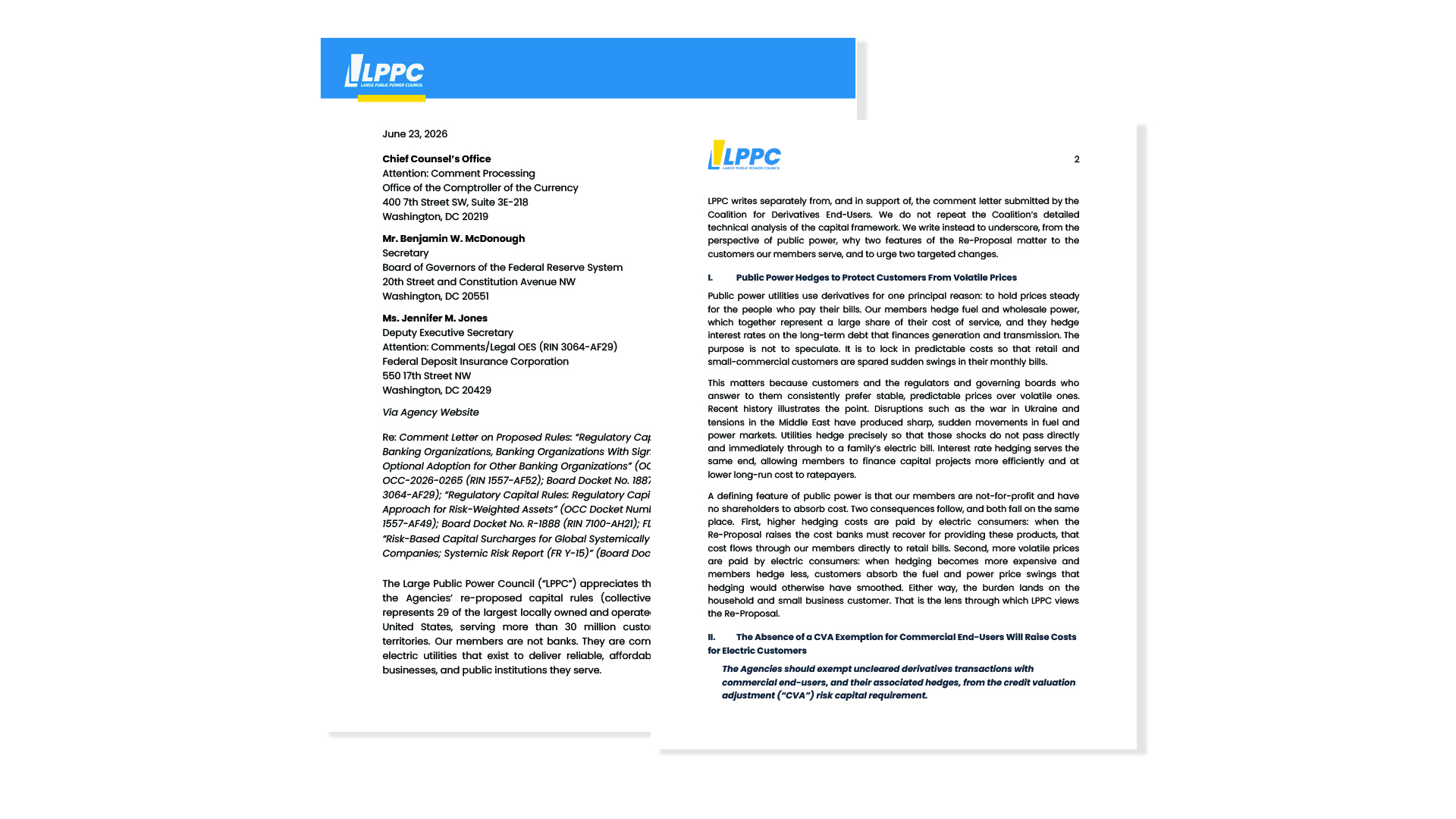
LPPC submitted follow-up comments to federal banking regulators urging targeted changes to the proposed capital reforms that could increase costs for electric customers across the country.
Read More
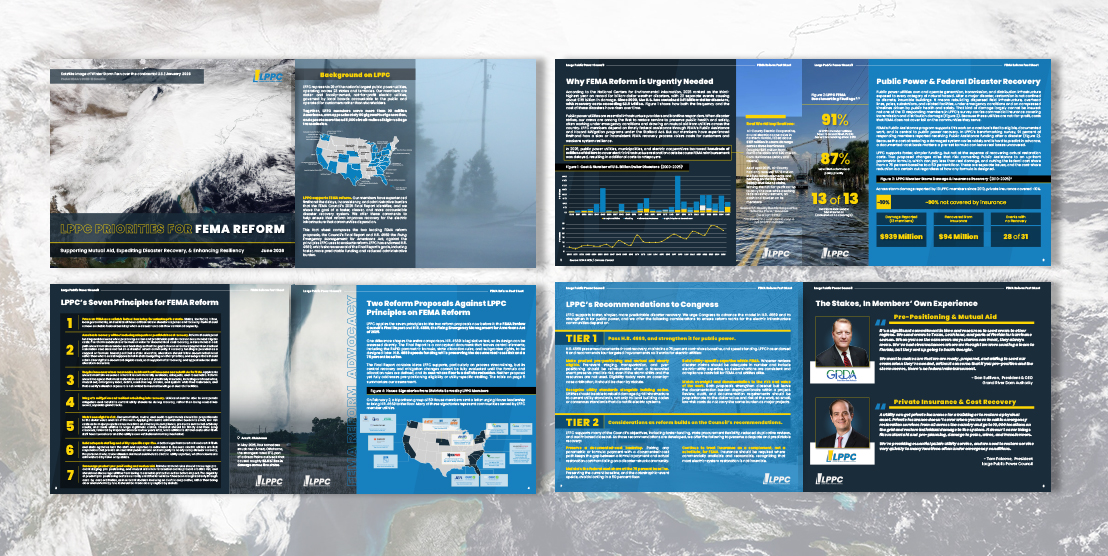
LPPC Releases New FEMA Reform Report: Supporting Mutual Aid, Expediting Disaster Recovery, & Enhancing Resiliency
June 16, 2026
In LPPC's latest FEMA Reform Policy Report, it lays out seven key principles for reform: keep FEMA a reliable backstop, speed recovery without cutting it, build in mitigation, match oversight to risk, and fund the pre-positioning and mutual aid that get the lights back on.
Read More
LPPC Supports Reauthorization of CISA 2015 & Stronger AI Cybersecurity for Critical Infrastructure
June 9, 2026
LPPC was invited to submit comments to the House E&C on its working draft of the Share AI Act. LPPC supports reauthorizing the Cybersecurity Information Sharing Act of 2015, which our members rely on as critical-infrastructure operators and information-sharing participants, which is set to expire on September 30, 2026.
Read More