Prepaid Energy Transactions Deliver Billions in Savings for Public Power Customers
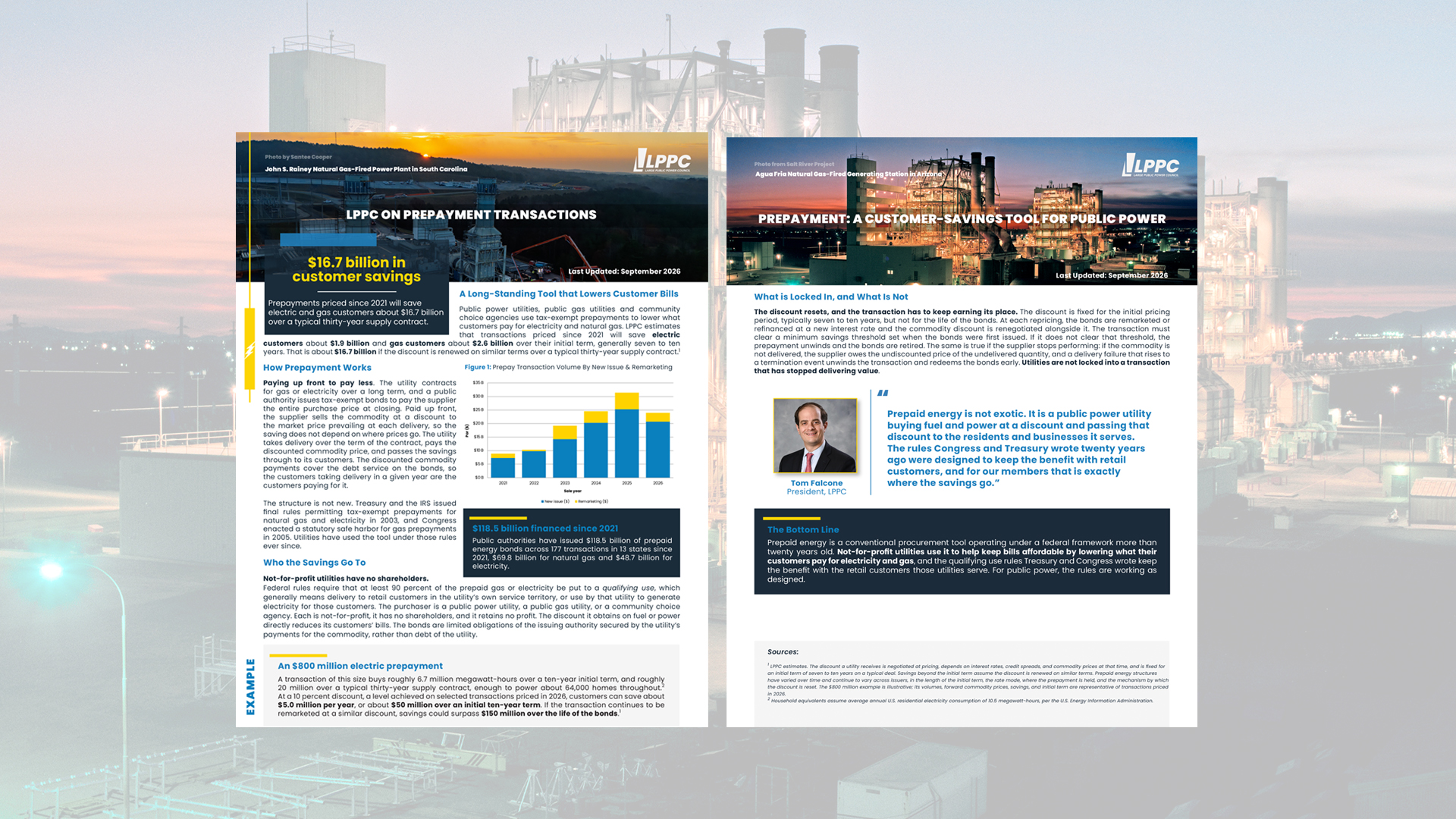
For more than two decades, public power utilities have used prepaid energy transactions as a procurement tool to lower the cost of electricity and natural gas for the communities they serve.
The structure is straightforward: a public authority issues tax-exempt bonds to prepay for a long-term supply of electricity or gas. In exchange for receiving payment upfront, the supplier provides the commodity at a discount to prevailing market prices. The utility then passes those savings directly to its customers.
The impact is significant. Over the last five years, public authorities have financed $118.5 billion in prepaid energy bonds across 177 transactions in 13 states, including $48.7 billion for electricity and $69.8 billion for natural gas. LPPC estimates these transactions will save electric customers approximately $1.9 billion and gas customers $2.6 billion over their initial terms. If similar discounts are renewed over typical 30-year supply contracts, those savings could reach approximately $16.7 billion.
The discount is fixed for the initial pricing period, typically seven to ten years. At each repricing, the bonds are remarketed, the discount is renegotiated, and the transaction must clear a minimum savings threshold or it unwinds.
These savings are designed to benefit customers, not shareholders. Federal qualifying-use requirements generally require at least 90 percent of prepaid energy to serve retail customers within a utility's service territory or generate electricity for those customers.
As LPPC President Tom Falcone explains, "Prepaid energy is not exotic. It is a public power utility buying fuel and power at a discount and passing that discount to the residents and businesses it serves."
For public power, prepaid energy transactions demonstrate how the tax-exempt financing framework can translate directly into lower energy costs and greater affordability for the customers and communities utilities serve.